Order in time for Christmas.
Find out more here.

Order in time for Christmas.
Find out more here.

Dishwasher buying guide

Hughes’ essential guide to choosing a dishwasher that fits your home, lifestyle, and budget.

Dishwasher Graphic
Dishwasher Buying Guide - Square Header

Dishwasher Buying Guide

Everything you need to know to find the perfect dishwasher for your kitchen and lifestyle

Dishwasher Graphic
Header Banner
Whether you're upgrading to enjoy the latest features, settling into a new home, or replacing an old dishwasher, you're in the right place. 

Find out exactly what to look for, from dimensions, water consumption and capacity, all the way through to the extra features that matter to you, in our dishwasher buying guide.
Whether you're upgrading to enjoy the latest features, settling into a new home, or replacing an old dishwasher, you're in the right place. 

Find out exactly what to look for, from dimensions, water consumption and capacity, all the way through to the extra features that matter to you, in our dishwasher buying guide.

Types of dishwasher

Before you explore the different features each dishwasher has to offer, it’s best to work out the type of dishwasher you need. There are four key types of dishwasher which we’ve broken down for you below:

Types of dishwasher

Before you explore the different features each dishwasher has to offer, it’s best to work out the type of dishwasher you need. There are four key types of dishwasher which we’ve broken down for you below:

Freestanding

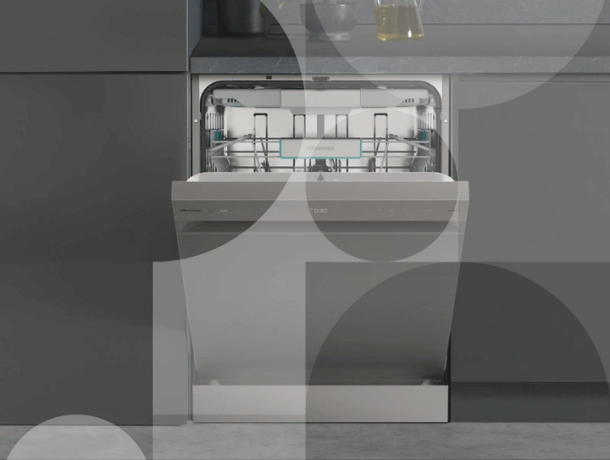
You'll find freestanding dishwashers are the easiest to install in your home. They are self-supporting and usually placed under a kitchen unit without being enclosed by a cupboard door. This means they can be removed easily from the kitchen during house moves or kitchen makeovers.

A freestanding dishwasher.

Integrated

Integrated dishwashers are fitted to sit behind a kitchen cabinet door, meaning they blend in with the rest of the cupboards to create a smarter, more seamless overall look in your kitchen.

An integrated dishwasher.

Semi-integrated

If you want the best of both worlds, a semi-integrated dishwasher is perfect for you. The units tuck neatly into your kitchen whilst keeping the control panel visible, allowing you to check on the progress at a quick glance. Whilst there are fewer options available for semi-integrated models, we do offer a selection of these.

Hotpoint H3B L626 B UK semi-integrated dishwasher

Slimline dishwasher

Perfect for smaller households, slimline dishwashers are becoming increasingly popular for those who don't need a large, family-sized dishwasher but want to avoid the washing up. Idealfor solo homeowners, couples and smaller families, slimline dishwashers are 45cm wide compared to a standard dishwasher's 60cm, meaning they can fit in most kitchens.

A slimline dishwasher.

Freestanding

You'll find freestanding dishwashers are the easiest to install in your home. They are self-supporting and usually placed under a kitchen unit without being enclosed by a cupboard door. This means they can be removed easily from the kitchen during house moves or kitchen makeovers.

Integrated

Integrated dishwashers are fitted to sit behind a kitchen cabinet door, meaning they blend in with the rest of the cupboards to create a smarter, more seamless overall look in your kitchen.

Semi-integrated

If you want the best of both worlds, a semi-integrated dishwasher is perfect for you. The units tuck neatly into your kitchen whilst keeping the control panel visible, allowing you to check on the progress at a quick glance. Whilst there are fewer options available for semi-integrated models, we do offer a selection of these.

Slimline dishwasher

Perfect for smaller households, slimline dishwashers are becoming increasingly popular for those who don't need a large, family-sized dishwasher but want to avoid the washing up. Ideal for solo homeowners, couples and smaller families, slimline dishwashers are 45cm wide compared to a standard dishwasher's 60cm, meaning they can fit in most kitchens.

What size dishwasher should I get?

What size dishwasher should I get?

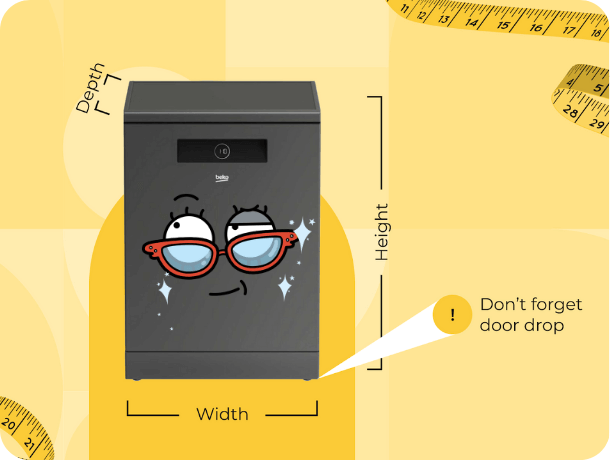
It's important that you know the dimensions of your new appliance before purchasing to make sure it’ll fit your kitchen space. Dishwashers are typically measured by depth, height and width.

Depth: Most dishwashers have a standard depth of between 55cm and 60cm, but it's always worth measuring the cupboard space to double-check against the dimensions of the appliance you want. Remember to leave adequate space to connect the waste and water pipes at the back, ideally around 10cm. Plus, the waste connection and water inlet pipe shouldn’t be any further than 50cm away from the dishwasher.  

Height: Make sure you have enough room under the countertop to fit the dishwasher comfortably. Dishwashers are typically around 85cm tall and ideally, there should be a bit of wiggle room to allow for easier removal.  

Width: Full size dishwashers have a standard width of 60cm. For slimline designs, this is 45cm. Make sure the cupboard space allows for fitting and removing the appliance for any moves or replacement.

How to measure a dishwasher.

It's important that you know the dimensions of your new appliance before purchasing to make sure it’ll fit your kitchen space. Dishwashers are typically measured by depth, height and width.

Depth: Most dishwashers have a standard depth of between 55cm and 60cm, but it's always worth measuring the cupboard space to double-check against the dimensions of the appliance you want. Remember to leave adequate space to connect the waste and water pipes at the back, ideally around 10cm. Plus, the waste connection and water inlet pipe shouldn’t be any further than 50cm away from the dishwasher.  

Height: Make sure you have enough room under the countertop to fit the dishwasher comfortably. Dishwashers are typically around 85cm tall and ideally, there should be a bit of wiggle room to allow for easier removal.  

Width: Full size dishwashers have a standard width of 60cm. For slimline designs, this is 45cm. Make sure the cupboard space you have allows space for fitting and removing the appliance for any moves or replacement.

Crystal Clear

Don't forget the door drop!

Don’t forget that you need to leave enough space for your dishwasher door to fully open and close.

Drawers, other cupboards and appliances may obstruct the opening or make your appliance unusable if its installation is poorly planned. So, keep this in mind when you’re choosing and measuring for your new dishwasher.
What capacity dishwasher do I need?

You should consider how often you will use your dishwasher and how frequently you will load it to help work out which capacity dishwasher you need.

The bigger the dishwasher, the more it'll take to fill so you can maximise the running time, but a smaller dishwasher may not be economical if used multiple times a day. 

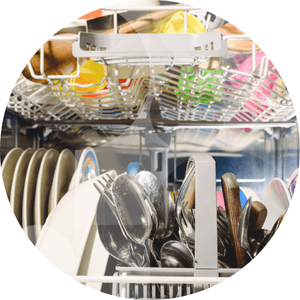
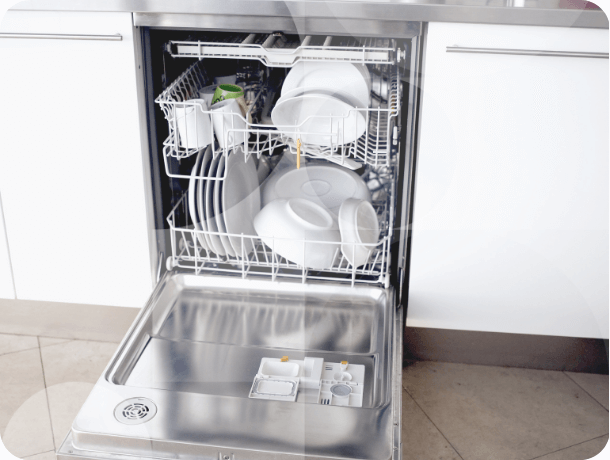
Dishwasher capacity is measured in place settings, which helps you quickly decide what size is right for your home based on how much dishes you regularly wash.

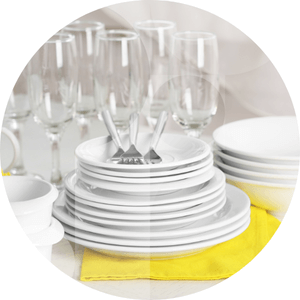
A full dishwasher.

What capacity dishwasher do I need?

You should consider how often you will use your dishwasher and how frequently you will load it to help work out which capacity dishwasher you need.

The bigger the dishwasher, the more it'll take to fill so you can maximise the running time, but a smaller dishwasher may not be economical if used multiple times a day. 

Dishwasher capacity is measured in place settings, which helps you quickly decide what size is right for your home based on how much dishes you regularly wash.

Crystal Clear

What does a place setting contain?

There’s no official definition of a place setting, but as a rough guide, a place setting would be a dinner plate, a dessert plate, a glass, a bowl, a cup, saucer and cutlery.
How many place settings do you need?

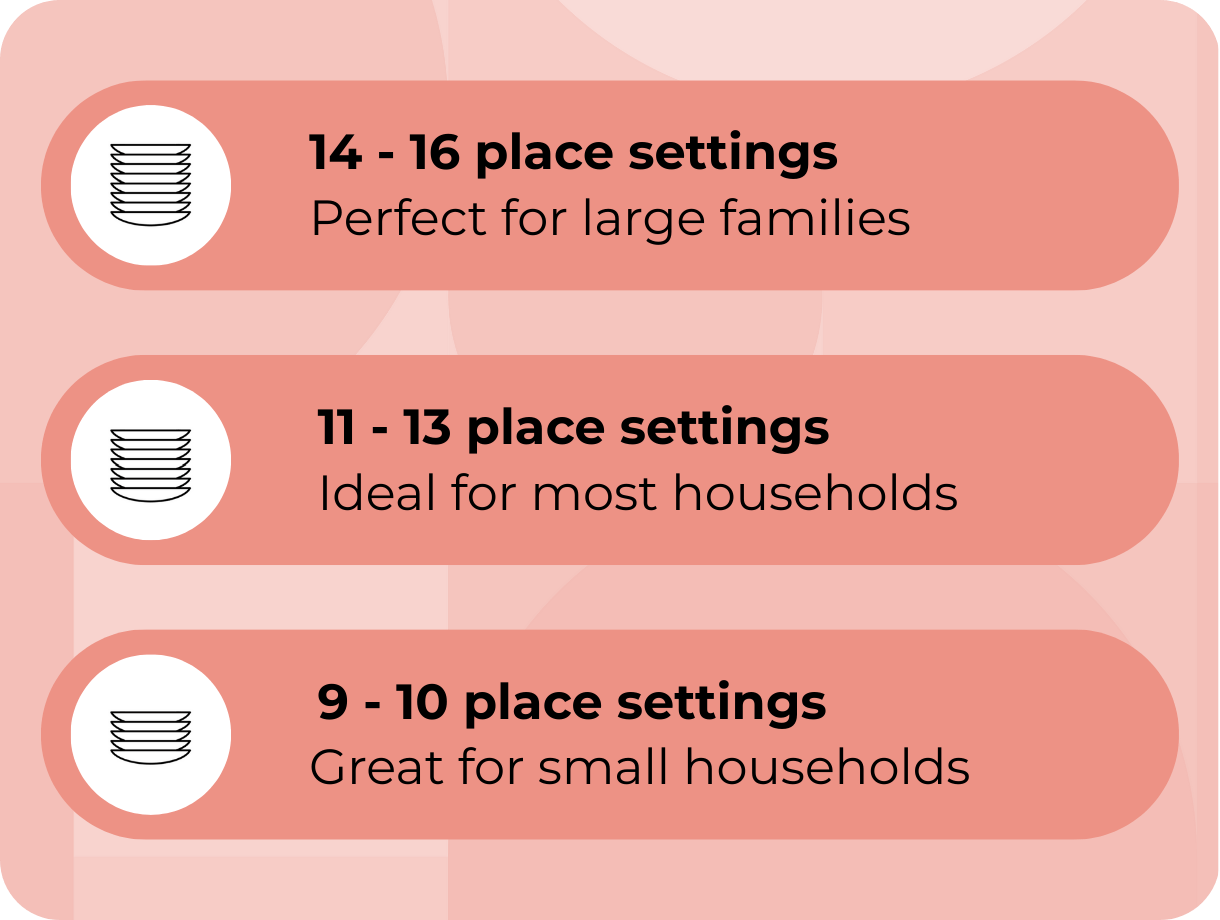
  • 14 - 16 place setting dishwashers are ideal for larger families or for those who regularly entertain guests, it’s the most common capacity of a full-size dishwasher. 
  • 11 - 13 place settings is perfect for families and entertaining, accommodating all your dishwashing needs with excellent versatility.
  • 9 - 10 place settings is the typical capacity of a slimline dishwasher, which is perfect for smaller households or single-occupancy properties.
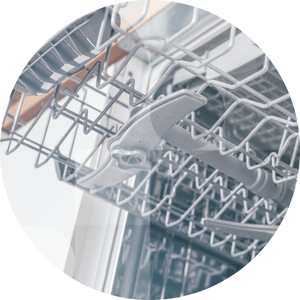
Looking at the dishwasher’s internal design, including whether it has cutlery drawers, baskets and cup holders can also ensure it cleans your items more efficiently.
A graphic illustrating how many place settings is needed for different households.
TV Categories Grid

How many place settings do you need?

  • 14 - 16 place setting dishwashers are ideal for larger families or for those who regularly entertain guests, it’s the most common capacity of a full-size dishwasher. 
  • 11 - 13 place settings is perfect for families and entertaining, accommodating all your dishwashing needs with excellent versatility.
  • 9 - 10 place settings is the typical capacity of a slimline dishwasher, which is perfect for smaller households or single-occupancy properties.
Looking at the dishwasher’s internal design, including whether it has cutlery drawers, baskets and cup holders can also ensure it cleans your items more efficiently.

Energy efficiency

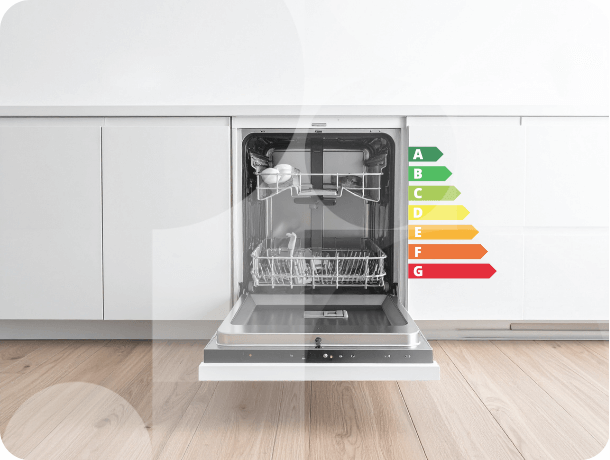
Choosing an energy-efficient dishwasher will be kinder on the planet and your wallet. In 2021, energy labels were updated to a simpler scale of A to G, which should make it easy for you to find a greener option. 

You can also look for machines that have eco programmes and check the average water consumption per wash cycle to help keep costs down for water and electricity use. 

Look out for the energy saving badges when browsing our dishwashers to see which have the best energy efficiency.

Shop our most energy efficient dishwashers here.

Dishwasher with energy efficiency ratings.

Energy efficiency

Choosing an energy-efficient dishwasher will be kinder on the planet and your wallet. In 2021, energy labels were updated to a simpler scale of A to G, which should make it easy for you to find a greener option. 

You can also look for machines that have eco programmes and check the average water consumption per wash cycle to help keep costs down for water and electricity use. 

Look out for the energy saving badges when browsing our dishwashers to see which have the best energy efficiency.

Shop our most energy efficient dishwashers here.

Crystal Clear

Water consumption

Compared to washing up by hand, dishwashers typically use less water. However, the amount of water an appliance uses per cycle changes from one model to the next. If you’re worried about your environmental impact or the cost of your water bills, then you should check how many litres a machine is using per wash cycle. Some models may use only 9 L per cycle, while most will run at about 12 L per wash.
Programmes

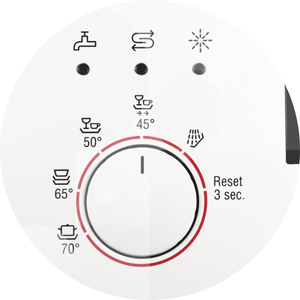
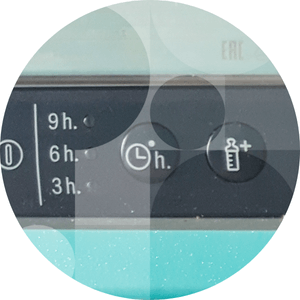
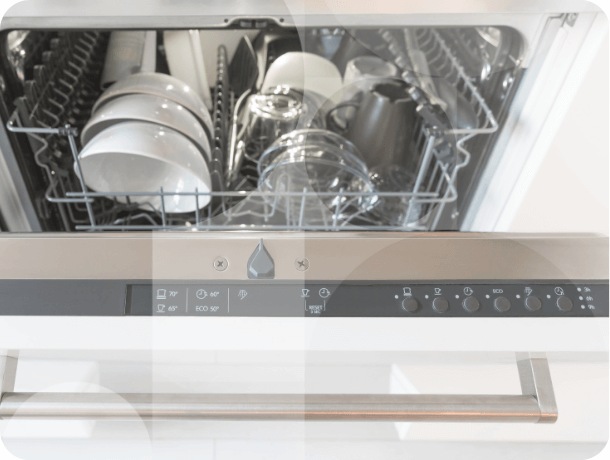
Dishwashers usually have several programmes with different temperatures and cycle times tailored to the types of items you’re washing. The "normal" wash setting usually involves a temperature of around 65C and is suitable for most everyday items, although you may want to use an "intensive" wash for heavily soiled pots and pans.

A shorter "quick wash" programme is helpful for dishes that require only light cleaning. A "half-load" programme is ideal if you haven't fully filled the dishwasher and will typically use less water. Similarly, an "economy" or "eco" programme operates at a lower temperature and uses the minimum amount of water. Bear in mind that while this setting is more energy and cost effective, it does typically take longer to run a cycle.
Dishwasher programme selector.

Programmes

Dishwashers usually have several programmes with different temperatures and cycle times tailored to the types of items you’re washing. The "normal" wash setting usually involves a temperature of around 65C and is suitable for most everyday items, although you may want to use an "intensive" wash for heavily soiled pots and pans.

A shorter "quick wash" programme is helpful for dishes that require only light cleaning. A "half-load" programme is ideal if you haven't fully filled the dishwasher and will typically use less water. Similarly, an "economy" or "eco" programme operates at a lower temperature and uses the minimum amount of water. Bear in mind that whilst this setting is more energy and cost effective, it does typically take longer to run a cycle.

What features do you need?

If you’ve started to look for a new dishwasher, you’ve probably noticed a host of features which different machines offer. The key is thinking about what really matters to you, so you can focus on the features that will make a real difference in your routine. You can find a breakdown of some important things to consider below:

What features do you need?

If you’ve started to look for a new dishwasher, you’ve probably noticed a host of features which different machines offer. The key is thinking about what really matters to you, so you can focus on the features that will make a real difference in your routine. You can find a breakdown of some important things to consider below:

Extra features

Quick wash

Dinner nearly ready and you don’t have any clean dishes? Quick wash has got you sorted. If your dishes are only lightly soiled, a quick wash cycle can have them ready to go in no time, with some machines only taking 15 minutes.

Drying

You got a machine to do the washing, so why not have them do the drying too? Many dishwashers come with handy features like a door that automatically opens on completion or a fan to circulate air to dry your dishes for you and let you relax. You’ll still need to put them away afterwards, though.

Low noise

If you plan to run your dishwasher overnight, you’ll probably want one that’s on the quieter side. Typically, dishwashers that are less than 50 decibels (dB) are considered quiet. Hotpoint’s H7FHS51X only hits 41 dB, meaning it will run almost silently in the background, without interrupting your night’s sleep.

Adjustable racks

When you’re attempting to squeeze every last pot and pan into your dishwasher, cramming everything in rarely works well. A machine with adjustable racks will allow you to reposition them to accommodate whatever you’re washing and maximise your dishwasher’s capacity.

Delay start

Dishwasher ready to go but you want it to run during off-peak electricity times? No problem. With a delay start dishwasher you can set the machine to start washing at a time that suits you.

Intensive washing

Don’t like having to soak your dirty dishes before a cycle? With intensive wash cycles you don’t need to. These cycles use higher temperatures and more water to clean those heavier stains, but they do use more energy than a regular cycle.

Glass cycle

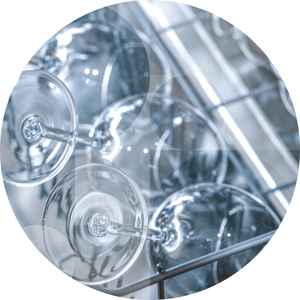
Worried about damaging your delicate glassware? Glass cycles are designed to minimise the risk of any breakage by using a lower temperature and less power to make sure your champagne flutes come out sparkling clean and importantly in one piece.

Flood protection

It’s perfectly normal to be worried about kitchen flooding considering how much water can go through a dishwasher. To put your mind at ease, many machines come with built-in flood prevention tools such as sensors that monitor water levels and check for leaks. If they detect a problem, they automatically activate the drain pump. Often, these models will have additional fittings at the back of the dishwasher so it’s worth double-checking that you have enough space.

Antibacterial

Give yourself peace of mind that your dishes don’t just look clean with a machine with antibacterial functionality. Typically, these machines crank up the temperature to 70°C for a period of the wash to eliminate any nasty germs and bacteria.

Quick wash

Dinner nearly ready and you don’t have any clean dishes? Quick wash has got you sorted. If your dishes are only lightly soiled, a quick wash cycle can have them ready to go in no time, with some machines only taking 15 minutes.

Drying

You got a machine to do the washing, so why not have them do the drying too? Many dishwashers come with handy features like a door that automatically opens on completion or a fan to circulate air to dry your dishes for you and let you relax. You’ll still need to put them away though.

Low noise

If you plan to run your dishwasher overnight, you’ll probably want one that’s on the quieter side. Typically, dishwashers that are less than 50 decibels (dB) are considered quiet. Hotpoint’s H7FHS51X only hits 41 dB, meaning it will run almost silently in the background, without interrupting your night’s sleep.

Adjustable racks

When you’re attempting to squeeze every last pot and pan into your dishwasher, cramming everything in rarely works well. A machine with adjustable racks will allow you to reposition them to accommodate whatever you’re washing and maximise your dishwasher’s capacity.

Delay start

Dishwasher ready to go but you want it to run during off-peak electricity times? No problem. With a delay start dishwasher you can set the machine to start washing at a time that suits you.

Intensive washing

Don’t like having to soak your dirty dishes before a cycle? With intensive wash cycles you don’t need to. These cycles use higher temperatures and more water to clean those heavier stains, but they do use more energy than a regular cycle.

Glass cycle

Worried about damaging your delicate glassware? Glass cycles are designed to minimise the risk of any breakage by using a lower temperature and less power to make sure your champagne flutes come out sparkling clean and importantly in one piece.

Flood protection

It’s perfectly normal to be worried about kitchen flooding considering how much water can go through a dishwasher. To put your mind at ease, many machines come with built-in flood prevention tools such as sensors that monitor water levels and check for leaks. If they detect a problem, they automatically activate the drain pump. Often, these models will have additional fittings at the back of the dishwasher so it’s worth double-checking that you have enough space.

Antibacterial

Give yourself peace of mind that your dishes don’t just look clean with a machine with antibacterial functionality. Typically, these machines crank up the temperature to 70°C for a period of the wash to eliminate any nasty germs and bacteria.

Delivery

Can’t wait for your dishwasher? We don’t think you should have to. Get delivery when you need it, including super-fast next day and Saturday delivery when you buy with Hughes.

Superfast delivery.

Installation

Worried about setting up your new dishwasher? We’ll take care of you. At check out, you'll have the option to book our experts to disconnect your old machine and install your new one. We can even recycle your old machine.

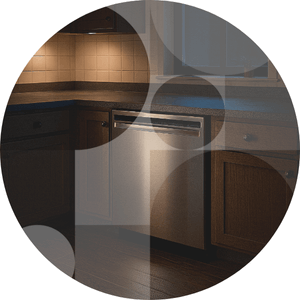
A dishwasher installed in a kitchen.

Delivery

Can’t wait for your dishwasher? We don’t think you should have to. Get delivery when you need it, including super-fast next day and Saturday delivery when you buy with Hughes.

Installation

Worried about setting up your new dishwasher? We’ll take care of you. At check out, you'll have the option to book our experts to disconnect your old machine and install your new one. We can even recycle your old machine.

FAQs

What size dishwasher do I need for my kitchen?

+
Most standard dishwashers measure around 60x60cm, whilst slimline models fit into a 45cm-wide gap. For families of 1-2 people or smaller kitchens, a slimline dishwasher (9-10 place settings) is typically sufficient. Full-size dishwashers (12-15 place settings) are better for families of 4+ or those who entertain frequently. Always measure your available space's width, height, and depth before purchasing, and remember to account for door clearance when the dishwasher is open.

How much should I spend on a dishwasher in the UK?

+
Dishwasher prices in the UK typically range from £250 for basic models to over £1,500 for premium brands. Budget-friendly options are available for under £300, whilst premium brands like Bosch and Miele offer superior performance and reliability. Consider your budget alongside expected lifespan.

What's the difference between integrated and freestanding dishwashers?

+
Integrated dishwashers are built into your kitchen units with a door panel that matches your kitchen cupboards, creating a seamless look. Semi-integrated models show the control panel, whilst fully integrated units hide all controls behind the door. Freestanding dishwashers are standalone units that can be placed anywhere with appropriate plumbing connections.

How energy efficient are modern dishwashers?

+
Look for dishwashers with an energy rating of C or above for the most energy-efficient models. Modern dishwashers are significantly more efficient than older models and often use less water than hand washing. Our A-rated dishwashers typically use around 0.54 kWh to 1 kWh per cycle, costing around between £70 to £100 annually in electricity if used everyday. Eco programmes use less energy and water but take longer to complete. Many manufacturers now offer models with smart features that optimise energy usage based on load size and soil level.

Do I need to use dishwasher salt and rinse aid?

+
Yes, most dishwashers in the UK require both salt and rinse aid due to our generally hard water. This prevents limescale buildup and ensures optimal cleaning performance. Rinse aid helps dishes dry spot-free and improves drying performance. Some all-in-one tablets include these components, but separate products often provide better results, especially in hard water areas.

How quiet should a dishwasher be?

+
Quiet-running dishwashers operate at lower noise levels and offer a more peaceful dishwashing experience without disturbing your quiet time. Noise levels are measured in decibels (dB). Anything under 44dB is considered very quiet, 44-47dB is quiet, and above 50dB may be noticeable. For open-plan kitchens or evening use, consider models rated 42dB or lower. Premium brands often feature better sound insulation, whilst budget models may operate at 47-52dB.

What wash programmes do I actually need?

+
Essential programmes include Eco (energy-efficient daily wash), normal/Auto (everyday cleaning), intensive (heavily soiled items), and Quick/Express (lightly soiled items needing fast cleaning). Additional useful programmes include Delicate/Glass (fragile items), Pre-rinse (prevents food from drying before full wash), and Half Load (when running smaller loads). Avoid paying extra for numerous specialty programmes you're unlikely to use.

How long do dishwashers typically last?

+
With proper maintenance, a quality dishwasher should last 10-15 years. Dishwashers are built to last, but warranty protection is important for unexpected issues. Factors affecting lifespan include water hardness, usage frequency, maintenance quality, and build quality. Regular cleaning, using appropriate detergents, and addressing minor issues promptly can extend your dishwasher's life. Premium brands often last longer but cost more upfront.