Extra 10% off 100s products with code: MAYDAY10

Extra 10% off 100s products with code: MAYDAY10

Soundbar buying guide

Discover everything you need to know to pick the perfect soundbar.

Samsung HW-Q990F Q-Series 11.1.4 Soundbar with Wireless Subwoofer & Rear Speakers

Struggling to hear dialogue clearly or finding your TV sounds a bit flat? A soundbar is one of the easiest ways to upgrade your audio.

Lift your TV’s audio, get richer, clearer sound than the TV’s built-in speakers and bring your home cinema to life.

Struggling to hear dialogue clearly or finding your TV sounds a bit flat? A soundbar is one of the easiest ways to upgrade your audio.

Lift your TV’s audio, get richer, clearer sound than the TV’s built-in speakers and bring your home cinema to life.

Do I need a soundbar?

A soundbar isn’t something every TV needs, but for most households it can make a real, noticeable difference. 

You’ll hear clearer voices, richer detail and deeper bass. Films feel more cinematic, games draw you in a little bit more, and even everyday programmes sound fuller and easier to follow. 

If you mostly watch light TV like news or reality shows, or you’ve already got a full home-cinema setup, you probably don’t need to add a soundbar to your TV setup.

Shop all Soundbars

Modern living room with TV and soundbar projecting immersive audio throughout the space.

Do I need a soundbar?

A soundbar isn’t something every TV needs, but for most households it can make a real, noticeable difference. 

You’ll hear clearer voices, richer detail and deeper bass. Films feel more cinematic, games draw you in a little bit more, and even everyday programmes sound fuller and easier to follow. 

If you mostly watch light TV like news or reality shows, or you’ve already got a full home-cinema setup, you probably don’t need to add a soundbar to your TV setup.

Shop all soundbars

Wired or wireless soundbar?

You have a few options when it comes to connecting a soundbar to your TV: wireless, wired or both.

Wired or wireless soundbar?

You have a few options when it comes to connecting a soundbar to your TV: wireless, wired or both.

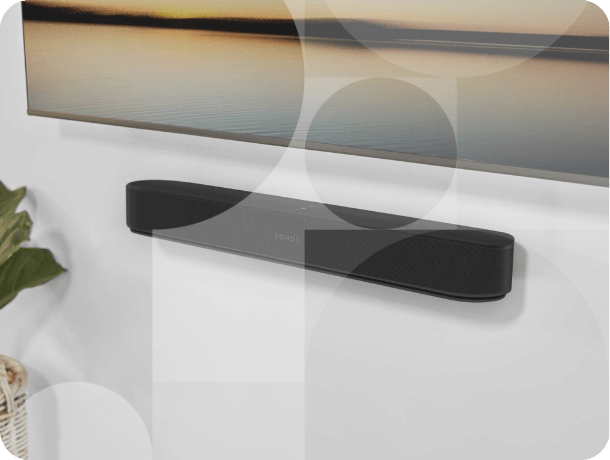
Wireless

A wireless connection between your TV and soundbar is typically through Bluetooth or Wi-Fi. Bluetooth connections can offer convenience, though sound quality may be lower than a wired or Wi-Fi connection. Wi-Fi-based connections can deliver high-quality audio comparable to wired setups.

Wall-mounted Sonos Beam Gen 2 Soundbar positioned below TV in a minimalist living room setup

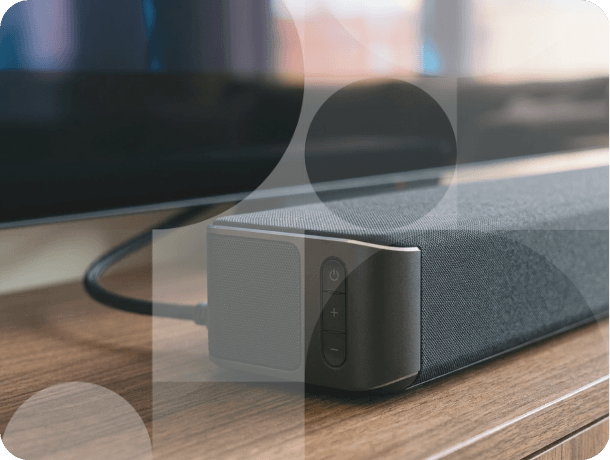
Wired

You can connect your soundbar to your TV through an HDMI cable by plugging this into the HDMI ARC or eARC socket on your TV. HDMI ARC or eARC is usually the type of connection that will give you the best sound. It also allows your TV and Soundbar to talk to each other and allows you to alter the volume with the same remote. If your TV or soundbar doesn’t support HDMI, using an Optical cable will still offer good sound quality, but they don’t support advanced formats like Dolby Atmos or DTS:X. 

For most customers, HDMI ARC or eARC is the best option for both quality and ease of use.

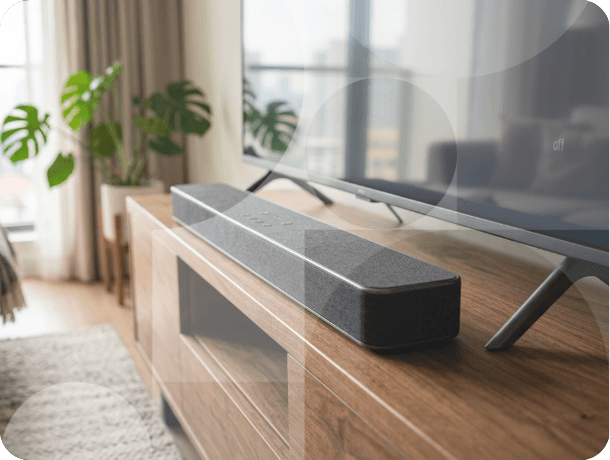
Close-up of wired soundbar on wooden TV stand with control buttons visible

Wireless

A wireless connection between your TV and soundbar is typically through Bluetooth or Wi-Fi. Bluetooth connections can offer convenience, though sound quality may be lower than a wired or Wi-Fi connection. Wi-Fi-based connections can deliver high-quality audio comparable to wired setups.

Wired

You can connect your soundbar to your TV through an HDMI cable by plugging this into the HDMI ARC or eARC socket on your TV. HDMI ARC or eARC is usually the type of connection that will give you the best sound. It also allows your TV and Soundbar to talk to each other and allows you to alter the volume with the same remote. If your TV or soundbar doesn’t support HDMI, using an Optical cable will still offer good sound quality, but they don’t support advanced formats like Dolby Atmos or DTS:X. 

For most customers, HDMI ARC or eARC is the best option for both quality and ease of use.

Soundbar channels

If you’ve started looking at soundbars, you’ve probably seen phrases like 2.1 or 11.1.4 to describe a soundbar. This is referring to the number of channels a soundbar has which can make a huge impact on the audio quality of your soundbar.

Soundbar channels

If you’ve started looking at soundbars, you’ve probably seen phrases like 2.1 or 11.1.4 to describe a soundbar. This is referring to the number of channels a soundbar has which can make a huge impact on the audio quality of your soundbar.

What does the soundbar number mean?

Soundbar channel numbers are shown as two or three figures, such as 2.1 or 11.1.4. Each number tells you how many channels of each type the soundbar uses, helping you understand how the sound is delivered around your room.

What does the soundbar number mean?

Soundbar channel numbers are shown as two or three figures, such as 2.1 or 11.1.4. Each number tells you how many channels of each type the soundbar uses, helping you understand how the sound is delivered around your room.

Let’s take an 11.1.4 soundbar as an example:

Let’s take an 11.1.4 soundbar as an example.

The first number

The first number (11) tells you the number of forward projecting or horizontal channels that the soundbar has, in this case 11.

The second number

The second number (1) is for the subwoofer and its enhanced bass, more often than not, this number is 1.

The third number

The third number (4) refers to the number of up-firing channels the soundbar has, in this case 4.
First Number: Horizontal channels

Horizontal channels are the speakers that project sound directly towards you from the front of the soundbar. They form the core of the audio experience, handling dialogue, music, and most of the on-screen action you hear.

First number: Horizontal channels

Horizontal channels are the speakers that project sound directly towards you from the front of the soundbar. They form the core of the audio experience, handling dialogue, music, and most of the on-screen action you hear.

What speakers will my soundbar have?


  • A 2-channel soundbar uses left and right speakers for simple stereo sound. 
  • A 3-channel soundbar also includes left and right speakers, plus a dedicated centre speaker to make dialogue clearer and easier to hear. 
  • Soundbars with higher channel numbers (5, 7, 9, 11 and more) add extra horizontal speakers that spread sound across the room for a wider, more immersive effect.

In short, the more horizontal channels you have, the more detailed and spacious your sound will feel.

Soundbar placed on wooden media unit beneath flat-screen TV in bright living room

What speakers will my soundbar have?


  • A 2-channel soundbar uses left and right speakers for simple stereo sound. 
  • A 3-channel soundbar also includes left and right speakers, plus a dedicated centre speaker to make dialogue clearer and easier to hear. 
  • Soundbars with higher channel numbers (5, 7, 9, 11 and more) add extra horizontal speakers that spread sound across the room for a wider, more immersive effect.

In short, the more horizontal channels you have, the more detailed and spacious your sound will feel.

Second number: Subwoofer

Second number: Subwoofer

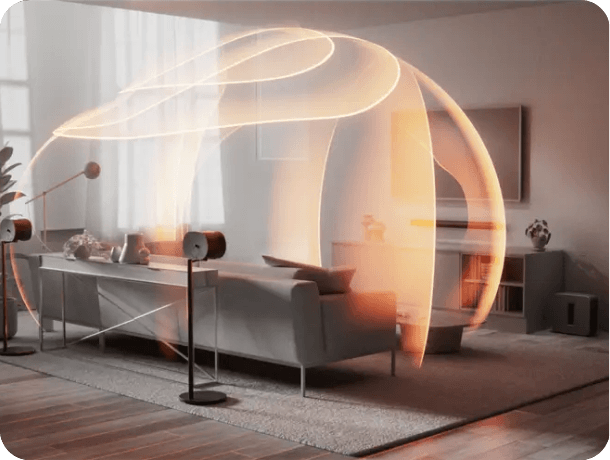
The second number (often “.1”) refers to the subwoofer channel. This is responsible for low-frequency sounds like deep bass, explosions and rumbling effects.

  • Most soundbars include one subwoofer channel, hence “.1”. 
  • In some cases, you may see “.2” when a system supports two dedicated subwoofers for even more powerful bass coverage. 
  • If the second number is “.0”, it means the soundbar does not include a subwoofer.

A stronger or additional subwoofer channel allows for richer, deeper bass that fills the room and provides cinematic impact.

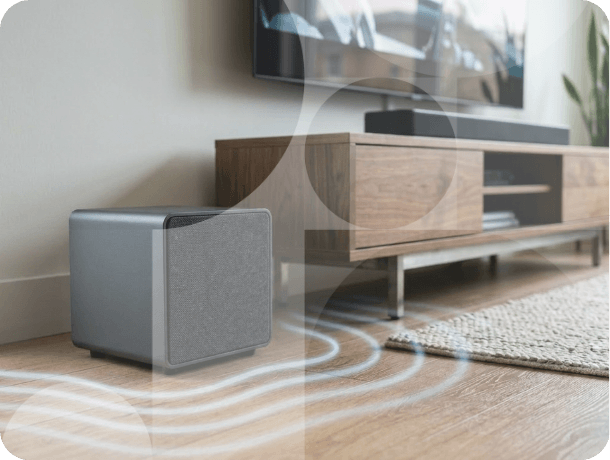
Living room with subwoofer creating immersive surround sound audio effect around seating area

The second number (often “.1”) refers to the subwoofer channel. This is responsible for low-frequency sounds like deep bass, explosions and rumbling effects.

  • Most soundbars include one subwoofer channel, hence “.1”. 
  • In some cases, you may see “.2” when a system supports two dedicated subwoofers for even more powerful bass coverage. 
  • If the second number is “.0”, it means the soundbar does not include a subwoofer.

A stronger or additional subwoofer channel allows for richer, deeper bass that fills the room and provides cinematic impact.

Third number: Up-firing channels

Third number: Up-firing channels

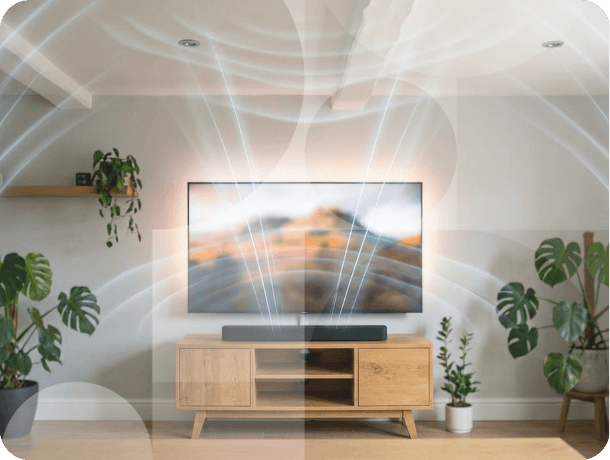
Up-firing channels are speakers that fire sound upwards, letting it bounce off the ceiling to create the illusion of height, a key feature in 3D audio formats like Dolby Atmos and DTS:X.

  • These channels add a vertical dimension, so effects like helicopters, rainfall, or overhead movements feel like they’re actually happening above you. 
  • The higher the third number (e.g., 2, 4, or even 6), the more height speakers there are and the more convincing and immersive the 3D sound experience will be.

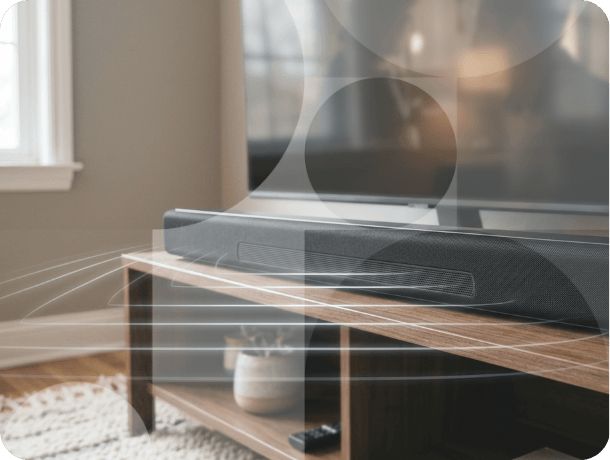
Soundbar emitting directional audio waves across living room from TV stand

Up-firing channels are speakers that fire sound upwards, letting it bounce off the ceiling to create the illusion of height, a key feature in 3D audio formats like Dolby Atmos and DTS:X.

  • These channels add a vertical dimension, so effects like helicopters, rainfall, or overhead movements feel like they’re actually happening above you. 
  • The higher the third number (e.g., 2, 4, or even 6), the more height speakers there are and the more convincing and immersive the 3D sound experience will be.

How many channels do I need?
Channels Best for What you get
2.0 / 2.1 Simple upgrade Better than TV speakers, basic stereo (+ bass on 2.1)
3.1 Clear dialogue Dedicated centre channel for voices + improved balance
5.1 Most people (best value) True surround sound for films and TV
7.1 Bigger rooms Wider, more precise surround positioning
5.1.2+ Dolby Atmos experience Adds height for 3D, more immersive sound
11.1.4 Premium home cinema Full cinematic immersion with surround + height

What is Dolby Atmos?

Dolby Atmos is designed to make your sound feel more real and immersive. Instead of audio just coming from in front or around you, it adds a sense of height, so sound can feel like it’s coming from above as well. Think rain falling, planes overhead, or sounds moving naturally through a scene. It does this using extra speakers (often up-firing) that bounce sound off the ceiling to create that added dimension.

Shop soundbars with Dolby Atmos

Home cinema setup with Dolby Atmos soundbar and immersive audio effects filling the room

What is Dolby Atmos?

Dolby Atmos is designed to make your sound feel more real and immersive. Instead of audio just coming from in front or around you, it adds a sense of height, so sound can feel like it’s coming from above as well. Think rain falling, planes overhead, or sounds moving naturally through a scene. It does this using extra speakers (often up-firing) that bounce sound off the ceiling to create that added dimension.

Shop soundbars with Dolby Atmos

What is DTS:X?

DTS:X works in a very similar way. It’s another format that makes sound feel more natural and immersive, helping effects and voices move more clearly around you. The main difference is that it’s a bit more flexible, it can adapt to different speaker setups, even if you don’t have dedicated height speakers.

Shop soundbars with DTS:X

Home cinema setup with Dolby Atmos soundbar and immersive audio effects filling the room

What is DTS:X?

DTS:X works in a very similar way. It’s another format that makes sound feel more natural and immersive, helping effects and voices move more clearly around you. The main difference is that it’s a bit more flexible, it can adapt to different speaker setups, even if you don’t have dedicated height speakers.

Shop soundbars with DTS:X

Dolby Atmos vs DTS:X

Dolby Atmos vs DTS:X

Both are designed to do the same thing: make your audio feel more lifelike and immersive

Dolby Atmos focuses on creating a more precise 3D effect, especially with height speakers.

DTS:X is more flexible and works well across a wider range of setups.  

In everyday use, both can sound excellent, and many soundbars support both.

Do you need them both? It depends on how you use your TV.

Both are designed to do the same thing: make your audio feel more lifelike and immersive

Dolby Atmos focuses on creating a more precise 3D effect, especially with height speakers.

DTS:X is more flexible and works well across a wider range of setups.  

In everyday use, both can sound excellent, and many soundbars support both.

Do you need them both? It depends on how you use your TV.

+ You’ll notice the difference if you:

  • Watch a lot of films or series
  • Want that “cinema at home” feel
  • Are choosing a mid-range or premium soundbar

You might not need them if you:

  • Just want clearer dialogue or better everyday TV sound
  • Mostly watch standard TV or casual content
  • Are sticking to a more basic setup

For most people, it’s a nice upgrade rather than essential, but when it’s there, you can definitely hear the difference.

For most people, it’s a nice upgrade rather than essential, but when it’s there, you can definitely hear the difference.

Icon

One thing to keep in mind

To get the full effect, both your soundbar and what you’re watching need to support Dolby Atmos or DTS:X.
Audio power

Audio power (measured in watts) gives you a rough idea of how loud a soundbar can go, but it’s only part of the story.

What really matters is how it performs in your room.

  • Smaller rooms don’t need as much power to sound full and clear
  • Larger spaces or open-plan areas benefit from higher power to fill the room properly
  • If you like your volume loud or cinematic, more power can help give you that extra impact

That said, more watts doesn’t always mean better sound. Speaker design, tuning and features like a subwoofer all play a big part in how it actually sounds.

Modern living room with TV and soundbar projecting immersive audio throughout the space

Audio power

Audio power (measured in watts) gives you a rough idea of how loud a soundbar can go, but it’s only part of the story.

What really matters is how it performs in your room.

  • Smaller rooms don’t need as much power to sound full and clear
  • Larger spaces or open-plan areas benefit from higher power to fill the room properly
  • If you like your volume loud or cinematic, more power can help give you that extra impact

That said, more watts doesn’t always mean better sound. Speaker design, tuning and features like a subwoofer all play a big part in how it actually sounds.

What audio power do I need?
Room size Typical power range* What it means for you
Small room 50–150W Clear, balanced sound at normal volumes without overpowering the space.
Medium room 150–300W Enough volume to fill the room comfortably with good depth and clarity.
Large / open-plan 300W+ Stronger, room-filling sound with better impact and bass.
*Power ranges are a general guide, performance can vary between models.

Subwoofers

Subwoofers

A subwoofer handles the lowest part of the audio spectrum, delivering deep bass you can really feel. 

Adding one brings extra depth and impact to your sound, making films, music and games more immersive. 

Some soundbars have a built-in subwoofer, while others come with a separate unit you can place wherever it works best.

A subwoofer handles the lowest part of the audio spectrum, delivering deep bass you can really feel. 

Adding one brings extra depth and impact to your sound, making films, music and games more immersive. 

Some soundbars have a built-in subwoofer, while others come with a separate unit you can place wherever it works best.

Do I need a subwoofer?

It really comes down to how much depth and impact you want from your sound.

A subwoofer adds weight to what you’re watching or listening to, things like explosions, music beats or background effects feel fuller and more engaging. Without one, sound can feel a bit lighter.

Want more impact and a cinematic feel? A subwoofer is worth it, if you just want clearer TV sound, it’s optional.

Shop soundbars with subwoofers

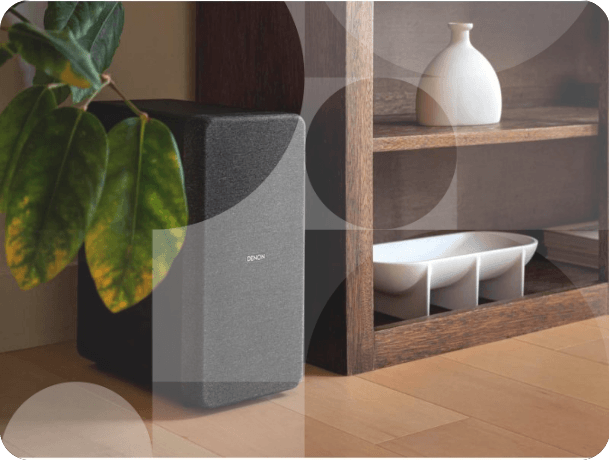
Compact subwoofer speaker placed next to wooden shelving unit in home interior.

Do I need a subwoofer?

It really comes down to how much depth and impact you want from your sound.

A subwoofer adds weight to what you’re watching or listening to, things like explosions, music beats or background effects feel fuller and more engaging. Without one, sound can feel a bit lighter.

Want more impact and a cinematic feel? A subwoofer is worth it, if you just want clearer TV sound, it’s optional.

Shop soundbars with subwoofers

Extra features

Features

Hi-Resolution audio

Hi-Resolution audio in soundbars lets you hear more of the detail that’s often lost with standard audio. By capturing a wider range of sound and greater depth, music, films and TV shows feel closer to how they were meant to be heard.

You’ll notice clearer vocals, richer instruments and more subtle textures, helping everything sound more natural and immersive.

This is best if you want the most detailed, natural sound possible.

Shop soundbars with high-resolution audio

Wall mounting

Is your TV mounted on the wall? Many soundbars are designed to mount neatly beneath it, helping you improve your TV’s sound without cluttering your living room with trailing wires.

Some models include a wall bracket, while others may need one purchased separately.

Shop wall mountable soundbars

Smart soundbars

Smart soundbars make it easy to bring everything together. They connect smoothly with the devices you already use, letting you control them from your TV or phone, stream wirelessly, and even use your voice to set the mood for movie night.

Shop smart soundbars

Multi-room soundbars

Multi-room soundbars let you stream audio to different speakers around your home, even across multiple rooms, without trailing wires everywhere. Add your soundbar to a multi-room setup and you can move from the living room to the kitchen without missing a moment of what you’re listening to.

Shop multi-room soundbars

Family enjoying TV in bright living room with wall-mounted screen and soundbar audio system.

Multi-room soundbars

Multi-room soundbars let you stream audio to different speakers around your home, even across multiple rooms, without trailing wires everywhere. Add your soundbar to a multi-room setup and you can move from the living room to the kitchen without missing a moment of what you’re listening to.

Shop multi-room soundbars

Delivery

You probably can’t wait to get immersed in your new soundbar and we don’t think you should have to. Get delivery when you need it, including next day or Saturday delivery when you buy with Hughes.

Delivery

You probably can’t wait to get immersed in your new soundbar and we don’t think you should have to. Get delivery when you need it, including next day or Saturday delivery when you buy with Hughes.

FAQs

FAQs

Do I really need a soundbar for my TV in the UK?

A soundbar isn't essential for every TV, but it makes a noticeable difference for most households. You'll get clearer dialogue, richer detail and deeper bass compared to built-in TV speakers.

What does 2.1 or 5.1 mean on a soundbar?

The numbers indicate the channel setup. The first is speakers, the .1 is the subwoofer, and a third number means height channels for Dolby Atmos.

Should I connect my soundbar with HDMI or optical cable?

HDMI ARC or eARC is best for sound quality and control. Optical is simpler but doesn't support advanced formats like Dolby Atmos.

What's the difference between Dolby Atmos and DTS:X soundbars?

Both create immersive 3D sound. Dolby Atmos focuses on precise positioning, while DTS:X adapts to your setup. Many soundbars support both.

What size soundbar do I need for my living room?

Match it to your room size. Small rooms need less power, while large spaces benefit from higher wattage for fuller sound.

Is a soundbar with a subwoofer worth it?

A subwoofer adds deeper bass and impact, great for films and music. For simple TV viewing, it's optional.

Can I use a soundbar wirelessly with my TV?

Yes, via Bluetooth or Wi-Fi. HDMI still gives the best quality and control for most setups.

What soundbar channels do I need for Dolby Atmos?

Look for models with height channels like 5.1.2. These create overhead sound for a more immersive experience.