Short on space? A washer dryer combines washing and drying in one appliance, so there’s no need to find room for two separate machines.
The main thing to consider is capacity: washer dryers can usually wash more than they can dry in one load, and drying can take longer than with a separate tumble dryer.
This guide takes you through capacity, drying methods and the key features to look for, helping you decide whether a washer dryer or two separate appliances will work best for you.
What is a washer dryer?
A washer dryer combines washing and drying in one appliance, so you can do both without moving your clothes between machines.
It’s a practical choice if you’re short on space, giving you the convenience of a washing machine and tumble dryer in a single footprint.
Is a washer dryer right for you?
Not sure if a washing machine or washer dryer fits your kitchen or utility room? Let's start with the basics.
| A washer dryer makes sense if: | A separate washing machine and tumble dryer usually makes more sense if: |
|---|---|
| You're short on space and can only fit one appliance | You wash and dry large loads regularly, since a washer dryer's drying capacity is smaller than its wash capacity |
| You don't dry every wash load in the machine (a duvet cover on the line, towels in the tumble dryer, for example) | You want faster turnaround between loads |
| You want the convenience of not having to move a wet load between two machines | You have the space and budget for two appliances |
If you're weighing this up, our team can talk through your household's washing habits and help you land on the right setup.
Quick buying checklist
- Measure your space, including plumbing, drainage and electrical requirements
- Check the wash capacity you need (typically 7–10kg for most households)
- Check the drying capacity separately; it's usually about half the wash capacity
- Decide between standard condenser drying and heat pump drying, and check whether the features you want (below) are worth the extra spend
- Check the spin speed, a faster spin means less time (and energy) needed to dry
- Confirm your energy rating priorities, since washer dryers run for longer cycles than a wash-only machine
How to choose the right washer dryer
Work out your capacity, both ways
Washer dryer capacity is usually quoted as two figures, for example "9kg wash / 6kg dry". The wash figure tells you how much laundry you can wash in one go. The dry figure tells you how much of that load can then be fully dried without splitting it. If you regularly do a 9kg wash but can only dry 6kg at a time, you'll need to take some items out before drying, or run the dryer twice.
A big 9kg drum handles the family wash comfortably, but if you're a household of one or two, a smaller 7kg model is often a better fit and can cost less to run.
Understand how a washer dryer actually dries clothes
Unlike a standalone tumble dryer, a washer dryer doesn't vent to the outside at all, so you won't need an external vent hose or a wall with outside access. Almost all washer dryers dry using a water-cooled condenser: the drum heats the air to evaporate moisture from your clothes, then cold water from the mains cools that moist air back into water, which drains away through the same waste connection as the wash cycle. There's no tank to empty, and it can go anywhere with a water supply and drain, which is why it suits flats and kitchens without outside wall access.
A smaller number of washer dryers use a heat pump instead. This works in a similar closed loop, but recycles the warm air rather than needing a constant flow of fresh mains water to cool it, which uses meaningfully less energy. The trade-off is a longer drying cycle and a higher price to buy.
| Condenser drying: | Heat pump drying: |
|---|---|
| The most common type. Reliable, no vent needed, and typically the lower cost option to buy. | Uses less energy per cycle, ideal if you dry a lot of loads, but cycles run longer and the appliance costs more upfront. |
Check the spin speed
Spin speed is measured in rpm (revolutions per minute) and tells you how quickly the drum spins to remove water from your clothes.
A higher spin speed can leave clothes with less moisture before drying begins, which may help reduce drying time. Most washer dryers offer maximum spin speeds of around 1,200–1,600rpm, with 1,400rpm a popular choice for everyday laundry.
Remember that the fastest setting isn't always right for every load, particularly when washing more delicate fabrics.
Key buying decisions
Freestanding vs integrated
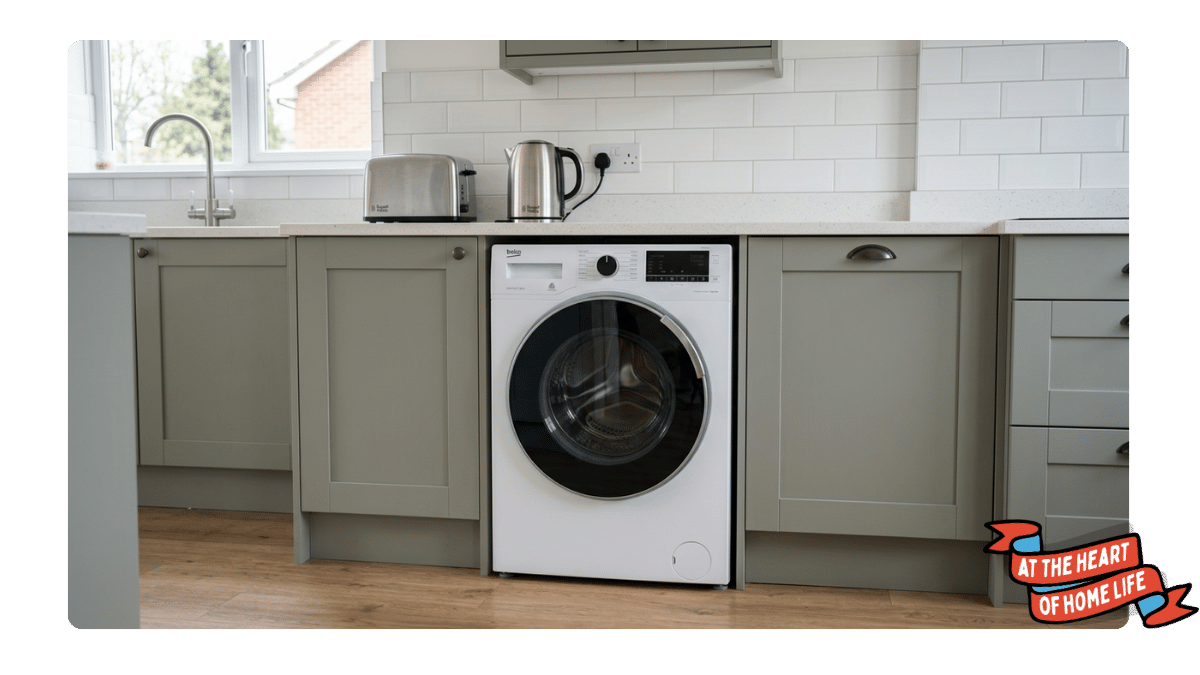
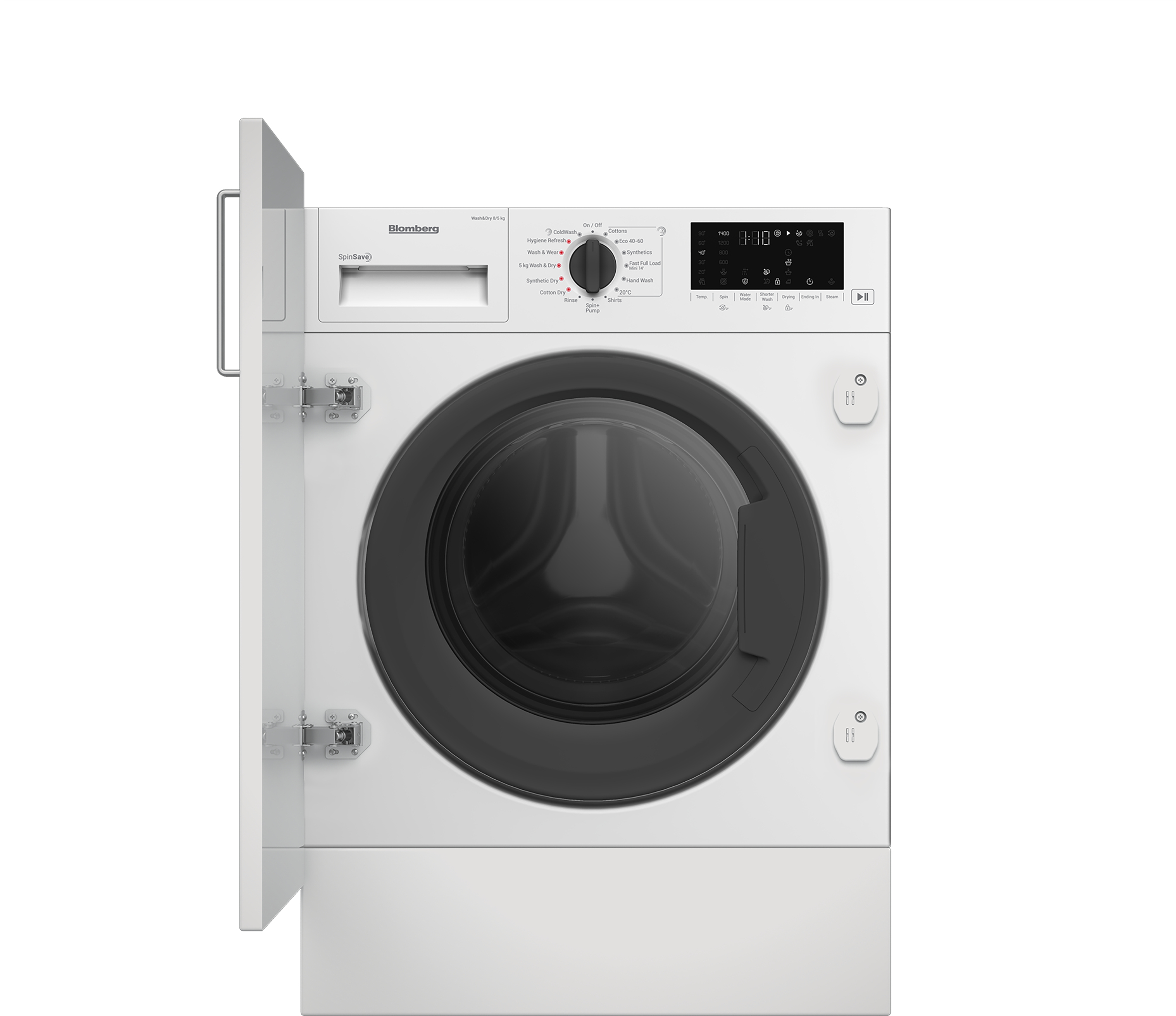
Freestanding washer dryers sit visibly in your kitchen or utility room and are easy to swap out later. Integrated models fit behind a matching cupboard door for a built-in kitchen look, but they're a fixed size, so measure carefully and check your kitchen units can accommodate one before you order.
Programmes that actually matter
It's easy to be won over by a long list of programmes, but a handful do most of the work in a typical household:
- Quick wash: for a light load you need back quickly
- Half load / eco setting: adjusts water and energy use for smaller loads
- Allergy or sanitise cycle: useful if anyone in the household has allergies or you want extra reassurance on hygiene
- Sensor drying: stops the drying cycle automatically once clothes are dry, rather than running a fixed time, which saves energy and reduces wear on fabric
Noise levels
If your washer dryer is near a living room or bedroom, check the decibel (dB) rating. Anything around 50dB or below for washing and mid-70s dB or below for spinning is reasonably quiet for a domestic setting.
Features worth looking for
A few extra features make a bigger difference day to day than a long spec sheet suggests. Here's what's genuinely worth paying attention to.
Inverter motor: runs quieter, uses less energy, and typically comes with a longer motor warranty than a standard motor. Worth having if the washer dryer is near a living space.
Steam refresh: freshens and de-creases clothes using steam, without a full wash cycle, useful for a shirt that's been in the wardrobe too long or clothes that just need airing.
Wi-Fi and app control: start a cycle remotely, get a notification when it's finished, and download extra programmes, handy if you're often out when a wash needs starting.
Auto-dose detergent: measures out the right amount of detergent for the load size automatically, so you use less and don't have to guess.
Digital display with time remaining: shows exactly how long is left in the cycle, useful for planning around a wash and dry that can take several hours.
Child lock: locks the control panel and door mid-cycle, worth having with young children in the house.
Self-clean drum: runs a maintenance cycle to clear detergent build-up and odours, so the drum stays fresher for longer between deep cleans.
Technology comparisons: standard condenser vs heat pump drying
| Standard condenser | Heat pump | |
|---|---|---|
| Installation | No external vent needed, drains via the waste connection | No external vent needed, drains via the waste connection |
| Drying speed | Faster cycle | Slower cycle |
| Running cost | Moderate | Lowest, often noticeably so |
| Best for | Households that dry occasionally, or want the lower upfront cost | Households drying frequently who want the lowest running costs over time |
| Price to buy | Usually the more affordable option | Usually costs more to buy |
There's no single winner. If you dry most loads in the machine, a heat pump model tends to pay for itself in lower bills over time. If you only occasionally dry in the machine, the lower upfront cost of a standard condenser model may suit you better.
Running costs
A washer dryer's drying cycle uses considerably more energy than its wash cycle, so the drying method and energy rating matter more here than on a wash-only machine. Under the current A–G energy label, look for the highest rating your budget allows, especially if you plan to use the drying function regularly. The Energy Saving Trust has independent guidance on typical running costs for laundry appliances if you want to compare like for like.
A few habits also help keep costs down. Washing at 30°C where possible, only using the dryer function for loads that genuinely need it, and cleaning the condenser unit and filters regularly so the appliance isn't working harder than it needs to.
Common mistakes to avoid
- Buying on wash capacity alone. Always check the dry capacity too, it's usually smaller and is what limits your everyday routine.
- Assuming you'll need an outside wall or a vent. You won't. Every washer dryer we sell needs a water supply and drain, not a vent, so it can go in a flat, a cupboard, or anywhere else your washing machine could go.
- Ignoring spin speed. A lower spin speed means longer, more expensive drying cycles.
- Assuming a washer dryer replaces a tumble dryer entirely. If you regularly dry large loads (bedding, towels for a big family), two separate appliances may suit you better.
Delivery and Installation
We offer free delivery, with professional installation available to help get your new washer dryer set up correctly. Our team can connect the water supply and waste, so you can leave the fitting to us and know everything has been properly connected.
If there’s anything unusual about the plumbing or where your washer dryer will be installed, let us know when ordering so we can make sure the right service is arranged.
Frequently Asked Questions
What's the difference between a washer dryer and a separate washing machine and tumble dryer?
A washer dryer washes and dries in one drum, so it takes up less space, but its drying capacity is smaller than its wash capacity. A separate washing machine and tumble dryer take up more space but let you wash and dry a full load without splitting it.
How long does a washer dryer take to wash and dry a full cycle?
This varies by model and programme, but a combined wash and dry cycle typically takes several hours, considerably longer than washing alone. Check the specific cycle times listed on each product page before you buy.
Do I need a vent for a washer dryer?
No. Washer dryers dry using a water-cooled condenser or a heat pump, not a vent, so they don't need an external wall or vent hose. That makes them a good fit for flats and kitchens without outside wall access.
Is a heat pump washer dryer worth the extra cost?
If you use the drying function regularly, the lower running costs usually make up the difference over the appliance's lifespan. If you rarely dry in the machine, a standard condenser model may be the more cost-effective choice upfront.
Can a washer dryer handle a family-sized wash?
Yes, look for a 9kg or 10kg wash capacity for a family of four or more, but check the drying capacity separately, since you may need to dry a family wash in two batches.
Summary
A washer dryer is a genuine space-saver, but it's worth being clear-eyed about the trade-off between wash and dry capacity before you buy. Think about how much of your laundry you actually dry in the machine, check the drying method suits your home, and pick a spin speed that keeps drying times reasonable. Not sure which one's right for you? Tell us your household size and where it's going, and we'll help you find one that works.

Shop washer dryers or get in touch if you'd like advice on which model suits your home.
Short on space? A washer dryer combines washing and drying in one appliance, so there’s no need to find room for two separate machines.
The main thing to consider is capacity: washer dryers can usually wash more than they can dry in one load, and drying can take longer than with a separate tumble dryer.
This guide takes you through capacity, drying methods and the key features to look for, helping you decide whether a washer dryer or two separate appliances will work best for you.
What is a washer dryer?
A washer dryer combines washing and drying in one appliance, so you can do both without moving your clothes between machines.
It’s a practical choice if you’re short on space, giving you the convenience of a washing machine and tumble dryer in a single footprint.
Is a washer dryer right for you?
Not sure if a washing machine or washer dryer fits your kitchen or utility room? Let's start with the basics.
| A washer dryer makes sense if: | A separate washing machine and tumble dryer usually makes more sense if: |
|---|---|
| You're short on space and can only fit one appliance | You wash and dry large loads regularly, since a washer dryer's drying capacity is smaller than its wash capacity |
| You don't dry every wash load in the machine (a duvet cover on the line, towels in the tumble dryer, for example) | You want faster turnaround between loads |
| You want the convenience of not having to move a wet load between two machines | You have the space and budget for two appliances |
If you're weighing this up, our team can talk through your household's washing habits and help you land on the right setup.
Quick buying checklist
- Measure your space, including plumbing, drainage and electrical requirements
- Check the wash capacity you need (typically 7–10kg for most households)
- Check the drying capacity separately; it's usually about half the wash capacity
- Decide between standard condenser drying and heat pump drying, and check whether the features you want (below) are worth the extra spend
- Check the spin speed, a faster spin means less time (and energy) needed to dry
- Confirm your energy rating priorities, since washer dryers run for longer cycles than a wash-only machine
How to choose the right washer dryer
Work out your capacity, both ways
Washer dryer capacity is usually quoted as two figures, for example "9kg wash / 6kg dry". The wash figure tells you how much laundry you can wash in one go. The dry figure tells you how much of that load can then be fully dried without splitting it. If you regularly do a 9kg wash but can only dry 6kg at a time, you'll need to take some items out before drying, or run the dryer twice.
A big 9kg drum handles the family wash comfortably, but if you're a household of one or two, a smaller 7kg model is often a better fit and can cost less to run.
Understand how a washer dryer actually dries clothes
Unlike a standalone tumble dryer, a washer dryer doesn't vent to the outside at all, so you won't need an external vent hose or a wall with outside access. Almost all washer dryers dry using a water-cooled condenser: the drum heats the air to evaporate moisture from your clothes, then cold water from the mains cools that moist air back into water, which drains away through the same waste connection as the wash cycle. There's no tank to empty, and it can go anywhere with a water supply and drain, which is why it suits flats and kitchens without outside wall access.
A smaller number of washer dryers use a heat pump instead. This works in a similar closed loop, but recycles the warm air rather than needing a constant flow of fresh mains water to cool it, which uses meaningfully less energy. The trade-off is a longer drying cycle and a higher price to buy.
| Condenser drying: | Heat pump drying: |
|---|---|
| The most common type. Reliable, no vent needed, and typically the lower cost option to buy. | Uses less energy per cycle, ideal if you dry a lot of loads, but cycles run longer and the appliance costs more upfront. |
Check the spin speed
Spin speed is measured in rpm (revolutions per minute) and tells you how quickly the drum spins to remove water from your clothes.
A higher spin speed can leave clothes with less moisture before drying begins, which may help reduce drying time. Most washer dryers offer maximum spin speeds of around 1,200–1,600rpm, with 1,400rpm a popular choice for everyday laundry.
Remember that the fastest setting isn't always right for every load, particularly when washing more delicate fabrics.
Key buying decisions
Freestanding vs integrated
Freestanding washer dryers sit visibly in your kitchen or utility room and are easy to swap out later. Integrated models fit behind a matching cupboard door for a built-in kitchen look, but they're a fixed size, so measure carefully and check your kitchen units can accommodate one before you order.
Programmes that actually matter
It's easy to be won over by a long list of programmes, but a handful do most of the work in a typical household:
- Quick wash: for a light load you need back quickly
- Half load / eco setting: adjusts water and energy use for smaller loads
- Allergy or sanitise cycle: useful if anyone in the household has allergies or you want extra reassurance on hygiene
- Sensor drying: stops the drying cycle automatically once clothes are dry, rather than running a fixed time, which saves energy and reduces wear on fabric
Noise levels
If your washer dryer is near a living room or bedroom, check the decibel (dB) rating. Anything around 50dB or below for washing and mid-70s dB or below for spinning is reasonably quiet for a domestic setting.
Features worth looking for
A few extra features make a bigger difference day to day than a long spec sheet suggests. Here's what's genuinely worth paying attention to.
Inverter motor: runs quieter, uses less energy, and typically comes with a longer motor warranty than a standard motor. Worth having if the washer dryer is near a living space.
Steam refresh: freshens and de-creases clothes using steam, without a full wash cycle, useful for a shirt that's been in the wardrobe too long or clothes that just need airing.
Wi-Fi and app control: start a cycle remotely, get a notification when it's finished, and download extra programmes, handy if you're often out when a wash needs starting.
Auto-dose detergent: measures out the right amount of detergent for the load size automatically, so you use less and don't have to guess.
Digital display with time remaining: shows exactly how long is left in the cycle, useful for planning around a wash and dry that can take several hours.
Child lock: locks the control panel and door mid-cycle, worth having with young children in the house.
Self-clean drum: runs a maintenance cycle to clear detergent build-up and odours, so the drum stays fresher for longer between deep cleans.
Technology comparisons: standard condenser vs heat pump drying
| Standard condenser | Heat pump | |
|---|---|---|
| Installation | No external vent needed, drains via the waste connection | No external vent needed, drains via the waste connection |
| Drying speed | Faster cycle | Slower cycle |
| Running cost | Moderate | Lowest, often noticeably so |
| Best for | Households that dry occasionally, or want the lower upfront cost | Households drying frequently who want the lowest running costs over time |
| Price to buy | Usually the more affordable option | Usually costs more to buy |
There's no single winner. If you dry most loads in the machine, a heat pump model tends to pay for itself in lower bills over time. If you only occasionally dry in the machine, the lower upfront cost of a standard condenser model may suit you better.
Running costs
A washer dryer's drying cycle uses considerably more energy than its wash cycle, so the drying method and energy rating matter more here than on a wash-only machine. Under the current A–G energy label, look for the highest rating your budget allows, especially if you plan to use the drying function regularly. The Energy Saving Trust has independent guidance on typical running costs for laundry appliances if you want to compare like for like.
A few habits also help keep costs down. Washing at 30°C where possible, only using the dryer function for loads that genuinely need it, and cleaning the condenser unit and filters regularly so the appliance isn't working harder than it needs to.
Common mistakes to avoid
- Buying on wash capacity alone. Always check the dry capacity too, it's usually smaller and is what limits your everyday routine.
- Assuming you'll need an outside wall or a vent. You won't. Every washer dryer we sell needs a water supply and drain, not a vent, so it can go in a flat, a cupboard, or anywhere else your washing machine could go.
- Ignoring spin speed. A lower spin speed means longer, more expensive drying cycles.
- Assuming a washer dryer replaces a tumble dryer entirely. If you regularly dry large loads (bedding, towels for a big family), two separate appliances may suit you better.
Delivery and Installation
We offer free delivery, with professional installation available to help get your new washer dryer set up correctly. Our team can connect the water supply and waste, so you can leave the fitting to us and know everything has been properly connected.
If there’s anything unusual about the plumbing or where your washer dryer will be installed, let us know when ordering so we can make sure the right service is arranged.
Frequently Asked Questions
What's the difference between a washer dryer and a separate washing machine and tumble dryer?
A washer dryer washes and dries in one drum, so it takes up less space, but its drying capacity is smaller than its wash capacity. A separate washing machine and tumble dryer take up more space but let you wash and dry a full load without splitting it.
How long does a washer dryer take to wash and dry a full cycle?
This varies by model and programme, but a combined wash and dry cycle typically takes several hours, considerably longer than washing alone. Check the specific cycle times listed on each product page before you buy.
Do I need a vent for a washer dryer?
No. Washer dryers dry using a water-cooled condenser or a heat pump, not a vent, so they don't need an external wall or vent hose. That makes them a good fit for flats and kitchens without outside wall access.
Is a heat pump washer dryer worth the extra cost?
If you use the drying function regularly, the lower running costs usually make up the difference over the appliance's lifespan. If you rarely dry in the machine, a standard condenser model may be the more cost-effective choice upfront.
Can a washer dryer handle a family-sized wash?
Yes, look for a 9kg or 10kg wash capacity for a family of four or more, but check the drying capacity separately, since you may need to dry a family wash in two batches.
Summary
A washer dryer is a genuine space-saver, but it's worth being clear-eyed about the trade-off between wash and dry capacity before you buy. Think about how much of your laundry you actually dry in the machine, check the drying method suits your home, and pick a spin speed that keeps drying times reasonable. Not sure which one's right for you? Tell us your household size and where it's going, and we'll help you find one that works.
Shop washer dryers or get in touch if you'd like advice on which model suits your home.
Find you new washer dryer at Hughes
d
a
g
Non-member price
£899.00
d
a
g
Non-member price
£899.00
d
a
g
Save
£81
Non-member price
£717.77
Save
£81
d
a
g
Save
£50
Non-member price
£799.00
Save
£50
d
a
g
Save
£151
£499.00
Save
£151
Reasons to shop with us
Buy now, pay later. We have finance options, including rental, to suit every budget.
We're rated exceptional on Feefo with 98% of customers recommending us.
Delivery when you need it. Choose a delivery day that works best for you.
Our customers love us! We’re rated excellent on Trustpilot, with over 50,000 reviews.
We’ll price match competitors so you’ll always get the best deal.