Up to 25% off clearance, once it's gone it's gone! Save now

Up to 25% off clearance, once it's gone it's gone! Save now

Electric cooker, oven and hob installation

Stress free installation from Hughes so you can start cooking sooner.

Cooker installation

Your new electric cooker or oven needs to be set up safely and correctly. With our expert installation service, everything is connected and checked for you, leaving you to focus on cooking, not cables.

Your new electric cooker or oven needs to be set up safely and correctly. With our expert installation service, everything is connected and checked for you, leaving you to focus on cooking, not cables.

We deliver across the UK but installation services are only available in select areas. To ensure the correct service can be arranged, installation for cooking appliances must be purchased in-store.

How much will it cost to install my new oven, cooker or hob?

How much will it cost to install my new oven, cooker or hob?

Cooking installation costs
Electric cooker installation £100 per appliance
Electric range cooker installation £120 per appliance
Electric oven installation £115 per appliance
Electric hob installation £115 per appliance

Electric cooker installation

Electric cooker installation

Here’s what you can expect when you book an electric cooker with Hughes.

Here’s what you can expect when you book an electric cooker with Hughes.

Electric cookers with induction hobs can interfere with pacemakers and insulin pumps so please consider this before you purchase. We will not deliver to or install to a household that has somebody living with an insulin pump or a pacemaker.

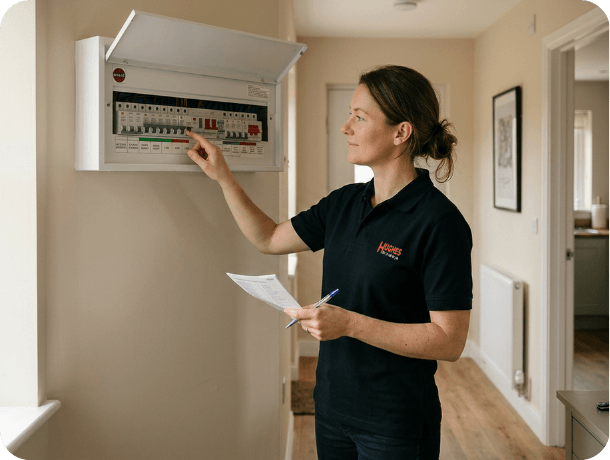
Please note: Your fuse box/consumer unit will be isolated and locked out during the installation process. If we’re unable to isolate it, we won’t be able to proceed with your installation.

Please note: Your fuse box/consumer unit will be isolated and locked out during the installation process. If we’re unable to isolate it, we won’t be able to proceed with your installation.

Built-in single or double oven installation

Built-in single or double oven installation

Our built-in fitting service is designed for the more technical installations where we will likely need to alter your cabinetry alongside our normal installation service. 

Our specially trained teams have all of the equipment required to fit facia panels and cut kitchen plinths as well as wooden/laminate worktops.

Our built-in fitting service is designed for the more technical installations where we will likely need to alter your cabinetry alongside our normal installation service. 

Our specially trained teams have all of the equipment required to fit facia panels and cut kitchen plinths as well as wooden/laminate worktops.

For ovens rated above 13amps, the appliance must be connected to a suitable dedicated circuit protected at the consumer unit. In some cases, the fuse or circuit protection may need to be updated by a qualified electrician before installation can go ahead.

Hob installation

Hob installation

Induction hobs can interfere with pacemakers so please consider this before you purchase.

Heat plate hobs need suitable ventilation underneath to allow heat to escape safely. Before installation, please make sure there is enough clearance below the appliance. If there’s a drawer or cupboard underneath the hob, a protective heat shield may also be required.

If you have any concerns regarding the measurements of the appliance you have ordered, please contact us in advance to confirm installation arrangements.

Heat plate hobs need suitable ventilation underneath to allow heat to escape safely. Before installation, please make sure there is enough clearance below the appliance. If there’s a drawer or cupboard underneath the hob, a protective heat shield may also be required.

If you have any concerns regarding the measurements of the appliance you have ordered, please contact us in advance to confirm installation arrangements.

Built-in appliance and hob installations require specialist fitting teams and may not be available in all areas. To ensure the correct installation service can be arranged, these installations can only be booked in store. Our colleagues will be happy to discuss your requirements and advise on the options available.

What to check before you book your installation


We know you want your installation to be stress-free. To ensure this we just need you to check a few things before you book an installation with us:

What to check before you book your installation

We know you want your installation to be stress-free. To ensure this we just need you to check a few things before you book an installation with us:

If you’ve booked a disconnection or recycling service, please avoid using your cooker on the day of collection. Our team won’t be able to move or disconnect the appliance if it is still hot.

We train our teams to carry out thorough electrical safety checks for cooking appliances. However, we’re unable to complete more complex electrical work. If we identify an issue that prevents installation, we’ll explain this clearly and help you understand the next steps.

We train our teams to carry out thorough electrical safety checks for cooking appliances. However, we’re unable to complete more complex electrical work. If we identify an issue that prevents installation, we’ll explain this clearly and help you understand the next steps.

Some extra guidance

Some extra guidance

If you’re unfamiliar with terms like consumer units, CCUs or CIS switches, don’t worry, we’ve broken them down into simple explanations below.

If you’re unfamiliar with terms like consumer units, CCUs or CIS switches, don’t worry, we’ve broken them down into simple explanations below.

What is a fuse board or consumer unit?

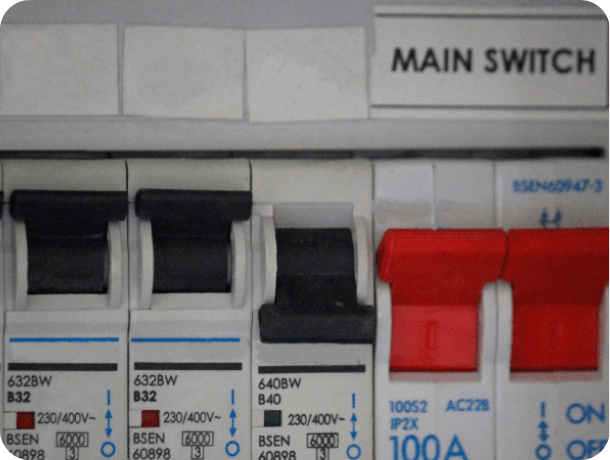
A consumer unit, sometimes called a fuse board or fuse box, is where the electricity coming into your home is safely distributed to the different circuits around the property. Think of it as the hub of your electrical system.

It not only directs power where it needs to go but also helps keep your home protected. Each circuit is monitored, and if there’s an overload or fault, the system will automatically trip to reduce the risk of electric shocks or fire.

Most consumer units also include a main switch, so the power can be turned off when needed. Inside, you’ll find a range of safety devices fitted to suit the layout and electrical needs of the property.

In most UK homes, the consumer unit is usually located close to the electricity meter. You’ll often find it in places such as a hallway, under the stairs, in a utility room or garage.

For safety reasons, our installers can only work with electrical systems that meet current British Standards and Hughes installation requirements. If the existing setup is unsafe or does not meet the required standards, we may be unable to complete the installation until this has been addressed by a qualified electrician.

What is a fuse board or consumer unit?

A consumer unit, sometimes called a fuse board or fuse box, is where the electricity coming into your home is safely distributed to the different circuits around the property. Think of it as the hub of your electrical system.

It not only directs power where it needs to go but also helps keep your home protected. Each circuit is monitored, and if there’s an overload or fault, the system will automatically trip to reduce the risk of electric shocks or fire.

Most consumer units also include a main switch, so the power can be turned off when needed. Inside, you’ll find a range of safety devices fitted to suit the layout and electrical needs of the property.

In most UK homes, the consumer unit is usually located close to the electricity meter. You’ll often find it in places such as a hallway, under the stairs, in a utility room or garage. 

For safety reasons, our installers can only work with electrical systems that meet current British Standards and Hughes installation requirements. If the existing setup is unsafe or does not meet the required standards, we may be unable to complete the installation until this has been addressed by a qualified electrician.

What is a Cooker Connection Unit (CCU)?

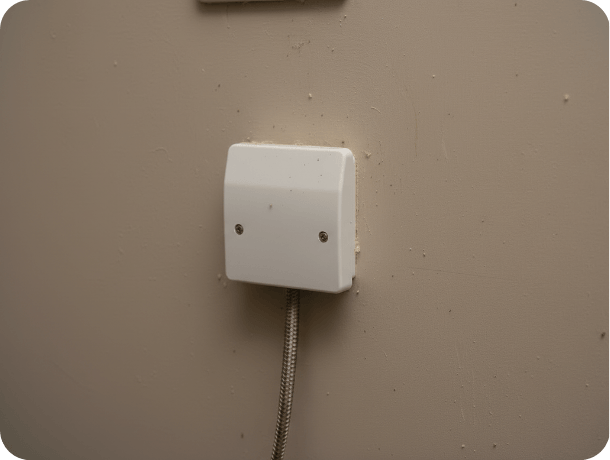
A cooker connection unit, sometimes called a cooker outlet plate is a fixed electrical fitting that safely connects your electric cooker, oven or hob to the mains supply. It’s designed to handle the higher electrical load these appliances need, providing a secure and permanent connection point in your kitchen.

This is usually mounted to the wall behind your cooker or oven.

If there is no cooker connection unit available, please make sure the appliance cable is long enough to safely reach the power supply and that the existing cable is the correct size for your new appliance.

What is a Cooker Connection Unit (CCU)?

A cooker connection unit, sometimes called a cooker outlet plate is a fixed electrical fitting that safely connects your electric cooker, oven or hob to the mains supply. It’s designed to handle the higher electrical load these appliances need, providing a secure and permanent connection point in your kitchen.

This is usually mounted to the wall behind your cooker or oven.

If there is no cooker connection unit available, please make sure the appliance cable is long enough to safely reach the power supply and that the existing cable is the correct size for your new appliance.

What is a Cooker Isolation Switch (CIS)?

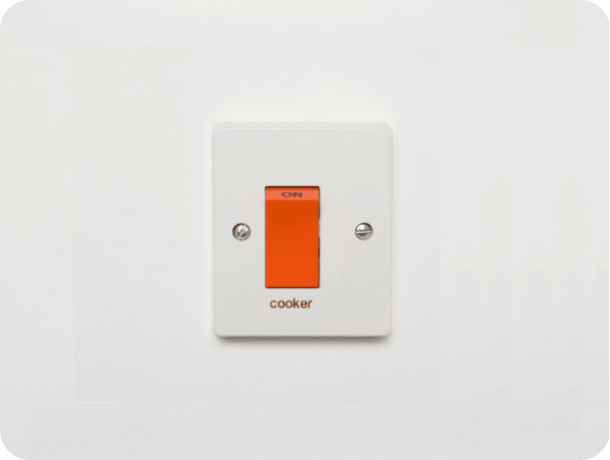
A cooker isolation switch (CIS) gives you a simple and safe way to turn off your electric cooker or hob without needing to switch off the entire circuit at the consumer unit.

It’s particularly useful during installation, maintenance or in an emergency. Designed to handle the higher electrical load cookers require, a CIS can be safely switched on or off whether the appliance is in use or not. 

In most UK homes, you’ll usually find the cooker isolation switch on the wall near the cooker, often positioned slightly above the worktop for easy access.

What is a Cooker Isolation Switch (CIS)?

A cooker isolation switch (CIS) gives you a simple and safe way to turn off your electric cooker or hob without needing to switch off the entire circuit at the consumer unit. It’s particularly useful during installation, maintenance or in an emergency. Designed to handle the higher electrical load cookers require, a CIS can be safely switched on or off whether the appliance is in use or not.

In most UK homes, you’ll usually find the cooker isolation switch on the wall near the cooker, often positioned slightly above the worktop for easy access.

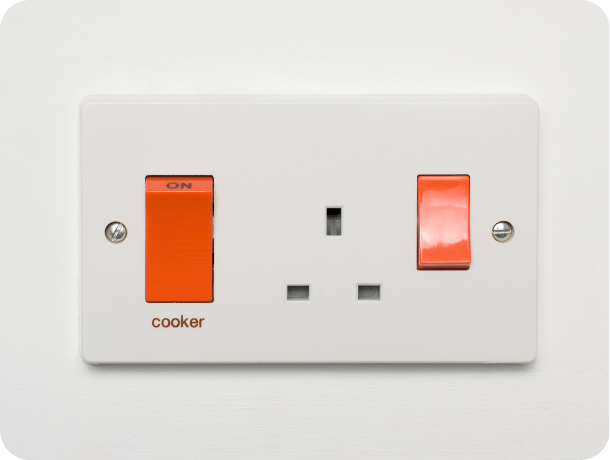
What is a CIS with an integrated 13amp socket?

A cooker isolation switch (CIS) with an integrated 13amp socket combines two functions in one fitting. It includes the cooker isolation switch for safely turning your electric cooker or hob on and off, along with a standard 13amp plug socket built into the same unit.

In most UK kitchens, you’ll usually find this unit mounted on the wall near the cooker, often positioned just above the worktop for easy access.

What is a CIS with an integrated 13amp socket?

A cooker isolation switch (CIS) gives you a simple and safe way to turn off your electric cooker or hob without needing to switch off the entire circuit at the consumer unit. It’s particularly useful during installation, maintenance or in an emergency. Designed to handle the higher electrical load cookers require, a CIS can be safely switched on or off whether the appliance is in use or not.

In most UK homes, you’ll usually find the cooker isolation switch on the wall near the cooker, often positioned slightly above the worktop for easy access.

What is the correct fuse to protect the cable and appliance?

The “correct fuse” simply means the fuse rating must match the electrical needs of your new appliance and the cable supplying it. Many electric cookers and hobs require a dedicated circuit with a higher amp rating than a standard 13amp plug.

You can usually check this by looking at the appliance’s power rating (shown in Amps on the rating label or in the manual) and comparing it with the fuse or breaker shown on your consumer unit.

If you’re unsure, we recommend asking a qualified electrician to confirm everything is suitable before installation.

What is the correct fuse to protect the cable and appliance?

The “correct fuse” simply means the fuse rating must match the electrical needs of your new appliance and the cable supplying it. Many electric cookers and hobs require a dedicated circuit with a higher amp rating than a standard 13amp plug. 
You can usually check this by looking at the appliance’s power rating (shown in Amps on the rating label or in the manual) and comparing it with the fuse or breaker shown on your consumer unit. 
If you’re unsure, we recommend asking a qualified electrician to confirm everything is suitable before installation.

What is the Hot Zone?

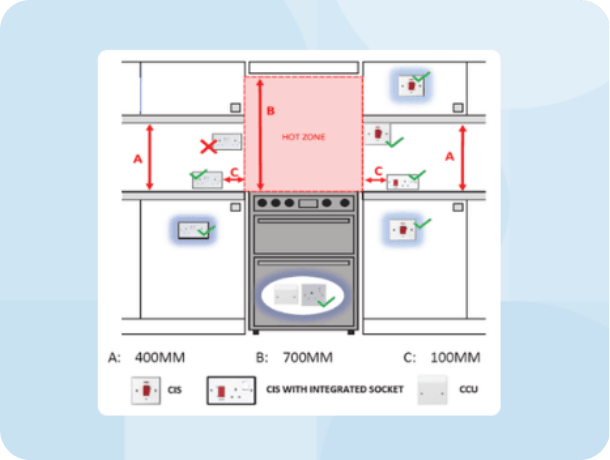
The hot zone is the area directly above your hob or cooker where heat and steam rise during cooking. Because this space is exposed to higher temperatures, there are safety guidelines around what can be installed there, including extractor fans, cabinets and electrical fittings.

For installation, we require a minimum clearance of 700mm (or the dimension given by the manufacturer) between the hob and any extractor hood or cabinet above. This helps protect surrounding surfaces and ensures your appliance can be fitted safely and correctly. 

If you’re unsure about your measurements, it’s worth checking before delivery to avoid any delays.

What is the Hot Zone?

For installation, we require a minimum clearance of 700mm (or the dimension given by the manufacturer) between the hob and any extractor hood or cabinet above. This helps protect surrounding surfaces and ensures your appliance can be fitted safely and correctly. 

If you’re unsure about your measurements, it’s worth checking before delivery to avoid any delays.

What is the safe distance from the Hot Zone?

To keep everything safe and compliant, electrical sockets must be positioned at least 100mm away from the hot zone. This helps reduce exposure to heat and steam during cooking.

A cooker isolation switch (CIS) can be installed closer than 100mm, provided it does not include an integrated 13amp socket. If the switch includes a socket, the 100mm distance rule applies. For safety reasons, the cooker isolation switch must also be positioned outside of the Hot Zone.

If you’re unsure about positioning, it’s always worth checking before installation to avoid any delays.

What is the safe distance from the Hot Zone?

A cooker isolation switch (CIS) can be installed closer than 100mm, provided it does not include an integrated 13amp socket. If the switch includes a socket, the 100mm distance rule applies. For safety reasons, the cooker isolation switch must also be positioned outside of the Hot Zone.

If you’re unsure about positioning, it’s always worth checking before installation to avoid any delays.

How to book cooking installations?


At the moment, we’re only able to offer installation of cooking appliances for purchases made in-store. When making your purchase, our team will explain your options to you and offer you installation of your new appliance.

How to book cooking installations?


At the moment, we’re only able to offer installation of cooking appliances for purchases made in-store. When making your purchase, our team will explain your options to you and offer you installation of your new appliance.

Our other services

In addition to installation, Hughes offers a number of additional handy services to make the install of your new product easier for you.

Our other services

In addition to installation, Hughes offers a number of additional handy services to make the install of your new product easier for you.

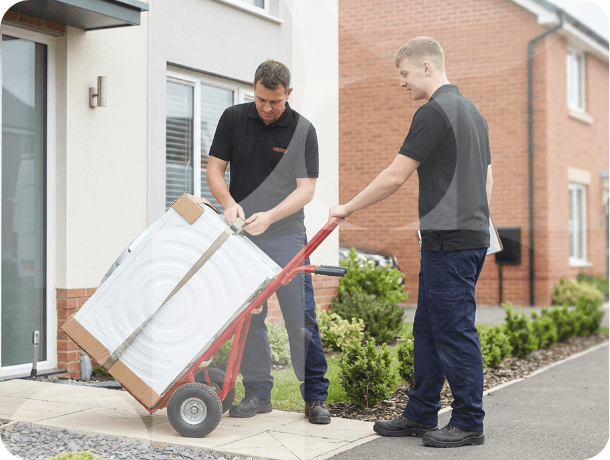
Delivery

Life doesn’t wait for a new appliance. That’s why we offer delivery when you need it, on hundreds of items. Whether you’re replacing something essential or upgrading your home, Hughes makes it easy to get your appliance delivered at a time that suits you.

Find out more

Two Hughes delivery team members carrying a large boxed appliance into a customer’s home while smiling at the camera.

Delivery

Life doesn’t wait for a new appliance. That’s why we offer delivery when you need it, on hundreds of items. Whether you’re replacing something essential or upgrading your home, Hughes makes it easy to get your appliance delivered at a time that suits you.

Find out more

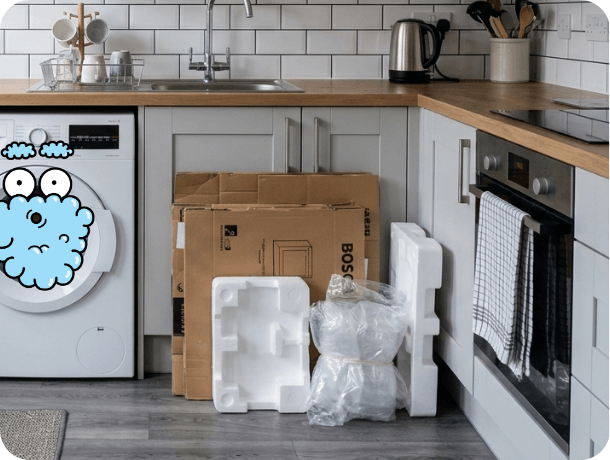
Unpack and take away

Want to save yourself a trip to the tip? Whether we’re installing your product or not, we can unpack it and take away the packaging for you, sparing you the hassle of getting rid of all that unwanted cardboard. This is part of our standard installation service and also available as a stand-alone service.

Kitchen with unpacked appliance packaging including cardboard, foam inserts, and protective wrapping.

Unpack and take away

Want to save yourself a trip to the tip? Whether we’re installing your product or not, we can unpack it and take away the packaging for you, sparing you the hassle of getting rid of all that unwanted cardboard. This is part of our standard installation service and also available as a stand-alone service.

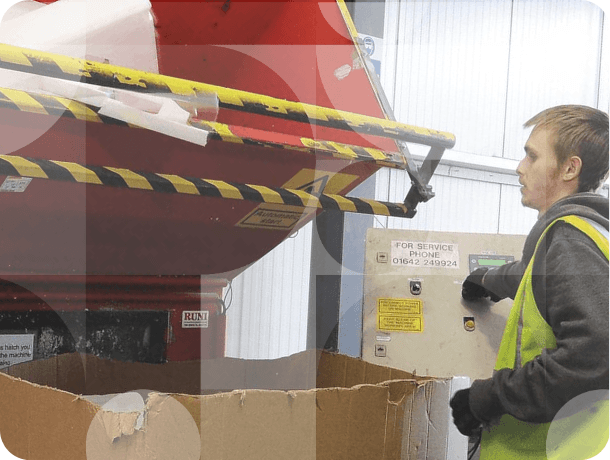
Appliance recycling

Unsure what to do with your old appliance? We can take it away with us when we deliver your new appliance and recycle it using our very own recycling centre in Thetford.

Find out more

Worker operating industrial recycling machine to process old appliance materials in warehouse

Appliance recycling

Unsure what to do with your old appliance? We can take it away with us when we deliver your new appliance and recycle it using our very own recycling centre in Thetford.

Find out more